Across the luxury and fashion sectors, sustainability, materials regeneration, renewable energy and slow fashion have moved from the margins to the centre of the agenda. Representing different sides of the same square, these aspects are increasingly aligned under a single idea: the Circular Economy. For a growing number of houses, it has become the organising principle of sustainable luxury branding.
The main arguments are well known. We should buy less frequently, and get more use from each item. Manufacturers should create new materials through less damaging processes, and recycle those materials once an item's usable life has ended. The cumulative result is a significant reduction in the waste currently sent to landfill.
For years, meaningful action was limited to a small number of enlightened designers and brands, such as Stella McCartney, Patagonia and Ecoalf, alongside materials innovators such as Econyl, re:newcell and Tree To Textile, and organisations such as the Ellen MacArthur Foundation. That is no longer the case. Circularity has moved from the conviction of a few to the expectation of many, and consumers now bring an unprecedented consciousness of their environmental impact to the brands they choose. For a growing number, it shapes what they buy, and what they will pay a premium for.
This shift changes what sustainability means for a brand. Done poorly, it becomes a campaign: a bolt-on initiative, a recycled-material capsule announced with more volume than it merits, a sustainability page that reads as an apology. Customers of luxury are unusually good at seeing through this, because the proposition they are buying is one of integrity. Sustainable luxury branding, done well, is a matter of coherence rather than communication, with the value built into the product long before it is written into the copy.
There is a deeper reason luxury and sustainability are natural allies rather than opposites. The oldest idea in luxury, buy less and buy better, is also the oldest idea in sustainability. An object made to last a lifetime, repaired rather than replaced, handed on rather than discarded, is by its nature the less wasteful choice. True luxury has always been the enemy of the disposable, and permanence, craft and restraint serve the environmental case and the commercial one at the same time.
As a luxury branding agency based in London, far from most manufacturing plants, SUM views Circularity in the broadest possible terms: a way of thinking that shapes every aspect of a brand rather than a badge applied at the end. The challenge is to weave the approach across the entire supply chain, from strategic planning, to the choice of fabrics and packaging, through to storytelling, brand design and marketing. The role of an eco luxury branding agency is not to attach a green message to an existing brand, but to help align what a brand says with what it genuinely does.
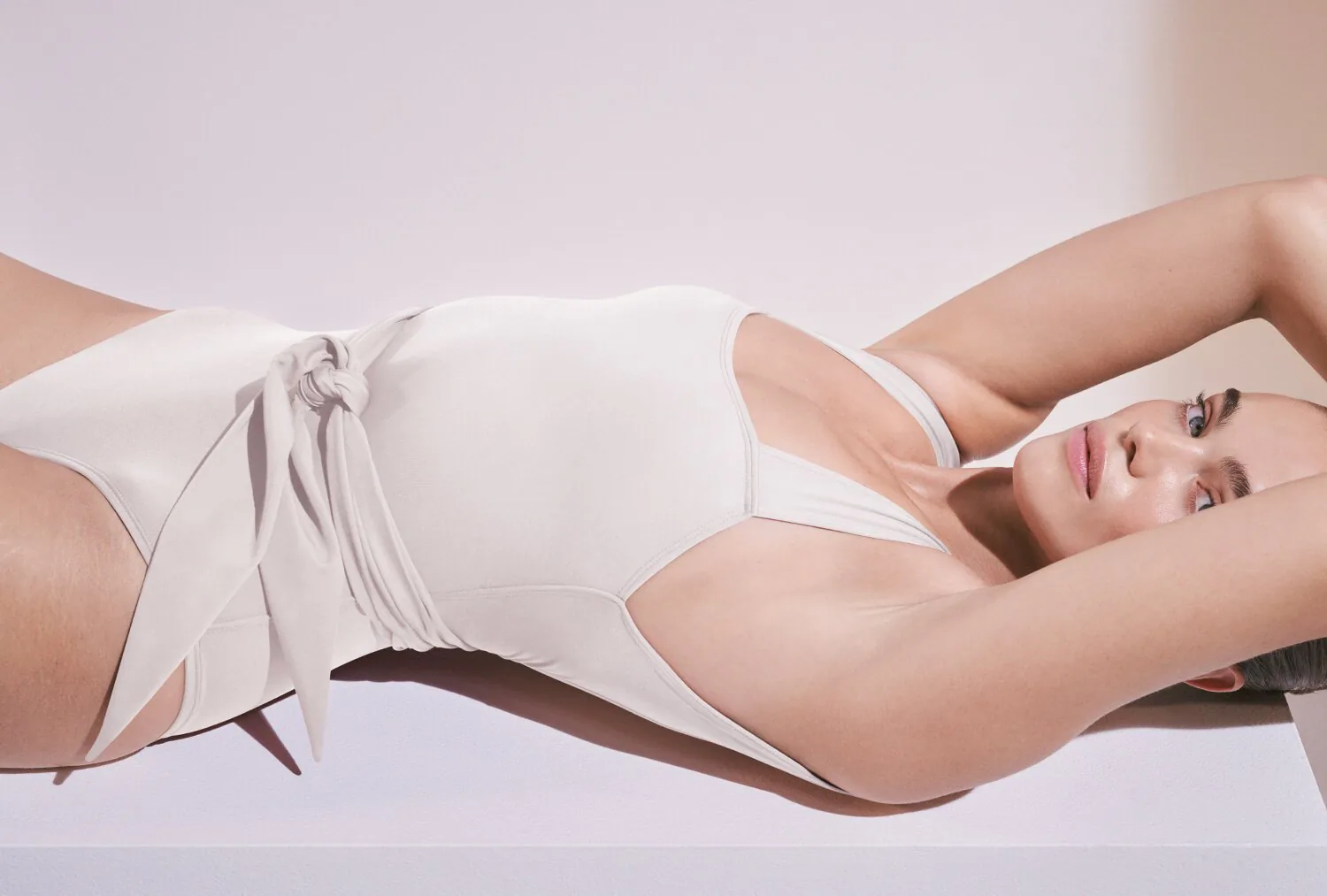
This is the thinking behind our work with Kōraru, a circular swimwear brand for which SUM led every branding dimension, from naming and strategy to website, content and social, with Circularity built in from the first decision rather than added to the last.
For luxury and fashion brands, the Circular Economy is no longer the future; it is the present. The houses that stand credibly for things made to endure will earn a coherence that cheaper competitors cannot fake, and in luxury that coherence is exactly what pricing power is built on. The quietest form of sustainability, in the end, is an object so well made and so well loved that it is never thrown away.